Label Printing: A Complete Guide to Methods, Materials, and Applications
Label printing is the process of producing printed labels used to identify, organize, track, package, or provide information about products and items. Labels can contain text, product information, barcodes, graphics, symbols, serial numbers, and other identification details.
Modern label printing combines traditional printing techniques with digital printing technology and automated production systems. The appropriate method depends on factors such as label material, design requirements, production volume, durability, and intended application.
Label printing is widely used across manufacturing, logistics, retail, food packaging, healthcare, electronics, and other industries where accurate product identification and information are important.
Why Is Label Printing Important?
Labels provide information that helps businesses, workers, and consumers identify products and packages. In many applications, labels also support inventory management, product tracking, and barcode-based identification.
Product Identification
A label can display information such as:
- Product name
- Product number
- Manufacturer information
- Batch or lot number
- Serial number
- Barcode or QR code
- Handling instructions
- Product specifications
Clear printing makes this information easier to read and process.
Packaging and Product Information
Labels are commonly used on bottles, boxes, containers, cartons, and other packaging. Depending on the product and applicable regulations, labels may contain ingredients, warnings, usage information, storage instructions, or other important details.
Inventory and Tracking
Barcode and variable-data label printing can support inventory control and logistics operations. Unique identification numbers allow products and packages to be tracked through different stages of handling.
Major Types of Label Printing
Several printing technologies are available for producing labels. Each technology has different characteristics and applications.
Digital Label Printing
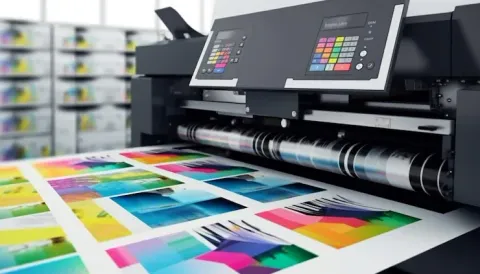
Digital printing uses digital files to transfer images and text directly onto label materials. It is suitable for applications requiring detailed graphics, variable information, or multiple designs.
Digital label printing can be useful when designs change frequently or when a project requires shorter production runs.
Flexographic Label Printing
Flexographic printing uses flexible printing plates to transfer ink onto a substrate. It is widely associated with packaging and high-volume label production.
Flexographic printing can work with various materials, including paper, films, and other flexible substrates.
Offset Printing
Offset printing transfers an image from a plate to a rubber blanket and then onto the printing surface. It is known for producing consistent, high-quality printed material.
Offset technology can be used when detailed graphics and consistent color reproduction are important.
Thermal Printing
Thermal printing uses heat to create an image. It is commonly used for barcode labels, shipping labels, receipts, inventory identification, and other applications.
There are two common approaches:
- Direct thermal printing
- Thermal transfer printing
Thermal transfer printing uses a ribbon to transfer ink onto the label material, while direct thermal printing creates an image directly on heat-sensitive material.
Screen Printing
Screen printing pushes ink through a prepared mesh screen onto the printing surface. It can be useful for applications requiring durable and highly visible printing on certain materials.
Label Printing Materials
The label substrate has a major effect on appearance, durability, and application performance.
Paper Labels
Paper is one of the most commonly used label materials. It can be suitable for indoor applications, product identification, retail packaging, and general-purpose labeling.
Different paper finishes can provide different visual characteristics, including matte and gloss surfaces.
Synthetic Labels
Synthetic materials such as polypropylene and polyester can provide greater resistance to moisture, abrasion, and certain environmental conditions than conventional paper.
They are often considered for industrial environments, outdoor identification, and applications where durability is important.
Transparent Labels
Transparent labels allow portions of the underlying surface to remain visible. They can be used for packaging designs where a minimal or integrated appearance is desired.
Label Printing Technologies
Modern label production can incorporate several technologies to improve accuracy and efficiency.
Barcode Printing
Barcode printing creates machine-readable identification patterns. Barcodes are widely used in inventory management, retail, warehousing, shipping, and logistics.
Print quality is important because damaged or poorly printed barcodes may be difficult for scanning systems to read.
QR Code Printing
QR codes can store more information than many traditional linear barcodes. Depending on the application, they can be used to connect physical labels with digital information.
Variable Data Printing
Variable data printing allows individual labels in the same production run to contain different information. Examples include:
- Serial numbers
- Product codes
- Batch numbers
- Dates
- Customer-specific information
- Unique identification codes
This technology is particularly useful for traceability and product identification.
Common Applications of Label Printing
Label printing is used across numerous industries and business processes.
Manufacturing
Manufacturers use labels for product identification, components, equipment, containers, and inventory management.
Industrial labels may need to withstand exposure to heat, moisture, chemicals, abrasion, or other environmental conditions.
Retail
Retail environments use labels for product identification, inventory control, pricing information, barcodes, and packaging.
Logistics and Warehousing
Shipping and logistics operations rely heavily on barcode and identification labels. Labels can help identify cartons, pallets, shipments, and inventory locations.
Food and Beverage Packaging
Food and beverage products commonly use labels to communicate product information, ingredients, nutritional details, storage information, and other relevant details.
Label requirements can vary depending on the product and jurisdiction.
Healthcare
Healthcare environments use labels for specimen identification, medical supplies, pharmaceutical packaging, equipment, and inventory management.
Accuracy is particularly important when labels are used to identify medical items or specimens.
Important Factors in Label Printing
Choosing an appropriate label printing approach requires consideration of several factors.
Printing Volume
Production volume can influence the most appropriate printing technology. Short runs may have different requirements from large-scale production.
Label Material
The substrate should be selected according to the environment and application. Paper, polyester, polypropylene, and other materials offer different characteristics.
Durability
For industrial or outdoor applications, labels may need resistance to moisture, abrasion, temperature changes, chemicals, or UV exposure.
Print Quality
Text, graphics, barcodes, and QR codes need sufficient clarity for their intended purpose. Resolution, ink characteristics, and printing technology can influence the final result.
Adhesive Requirements
The adhesive is another important component. Different surfaces may require different adhesive characteristics, particularly when labels are applied to glass, plastic, metal, cardboard, or textured surfaces.
Label Design Considerations
Effective label design combines readability with accurate information.
Typography
Text should be sufficiently clear and appropriately sized for the intended viewing distance. Consistent typography can also improve information hierarchy.
Color and Contrast
Strong contrast between text and background can improve readability. Color selection should also account for the printing process and material.
Barcode and QR Code Placement
Machine-readable codes should have sufficient space and contrast around them. Distortion, low resolution, or unsuitable placement can affect scanning performance.
Regulatory Information
Certain products may require specific information or labeling formats. Requirements can differ by industry and jurisdiction, so applicable regulations should be reviewed before production.
Digital Transformation in Label Printing
Digital printing has expanded the range of possibilities for modern label production. Businesses can create variable designs, personalized identification, and short production runs without relying exclusively on traditional plate-based processes.
Automation can also connect label production with inventory, manufacturing, and enterprise systems. This can help reduce manual data entry and improve consistency.
Sustainable Label Printing
Environmental considerations have become increasingly relevant to printing and packaging.
Several areas may be considered when evaluating the environmental impact of labels:
- Material selection
- Recyclability
- Ink technology
- Waste reduction
- Efficient production processes
- Packaging design
- Substrate thickness
The sustainability of a label depends on the complete combination of material, adhesive, ink, printing process, and disposal or recycling conditions.
How to Choose a Label Printing Method
The appropriate printing method depends on the specific requirements of the application.
Consider the following questions:
- What quantity of labels is required?
- Which material will the label be applied to?
- Will the label be exposed to moisture or heat?
- Is variable information required?
- Does the label contain a barcode or QR code?
- How long must the label remain readable?
- What level of graphic detail is required?
- Are there industry-specific labeling requirements?
Answering these questions can help identify suitable printing technology and materials.
Future Trends in Label Printing
The label printing industry continues to incorporate digital technologies, automation, variable-data capabilities, and improved materials.
Several developments are receiving attention:
Smart and Connected Labels
Labels can incorporate technologies such as QR codes and other digital identification systems to connect physical products with electronic information.
Automated Production
Automation can help integrate label production with manufacturing, inventory, and logistics workflows.
Advanced Digital Printing
Digital printing technology continues to support variable information, detailed graphics, shorter production runs, and changing product requirements.
Sustainable Materials
Research and development in recyclable, lightweight, and alternative label materials may influence future packaging and labeling practices.
Conclusion
Label printing is an important part of product identification, packaging, logistics, manufacturing, and inventory management. Different technologies—including digital, flexographic, offset, thermal, and screen printing—provide options for different applications.
Material selection, durability, print quality, barcode readability, adhesive performance, and regulatory requirements should all be considered when developing a labeling system. As digital printing, automation, and connected labeling technologies continue to develop, label printing is becoming increasingly integrated with modern production and information systems.